Ode To Joy

My writing over the last month has been prolific. Unfortunately, none of it has made it out of the space between my ears. The only time I have written more prodigiously was when I attended 10-day silent meditation retreats at the Dhamma Kuñja Vipassana Meditation Center in Onalaska, Washington, where books and writing materials were banned. There, voluntarily imprisoned in the jail of my mind, I wrote a novel, and a memoir, at least three seasons of an original television series, a Modern Love submission for The New York Times, and a few tight-ten sets for my standup repertoire.
These days, some of my writing happens on drives between Olga and Eastsound, but most of it occurs when I'm attached to the Stihl FS-131 string trimmer, and more recently, the Craftsman LT2000. On this property, there is lawn, garden, field and bramble. My goal for this year is to keep it from being all of these things at once, but at this moment in early May, field and bramble are insinuating themselves everywhere.
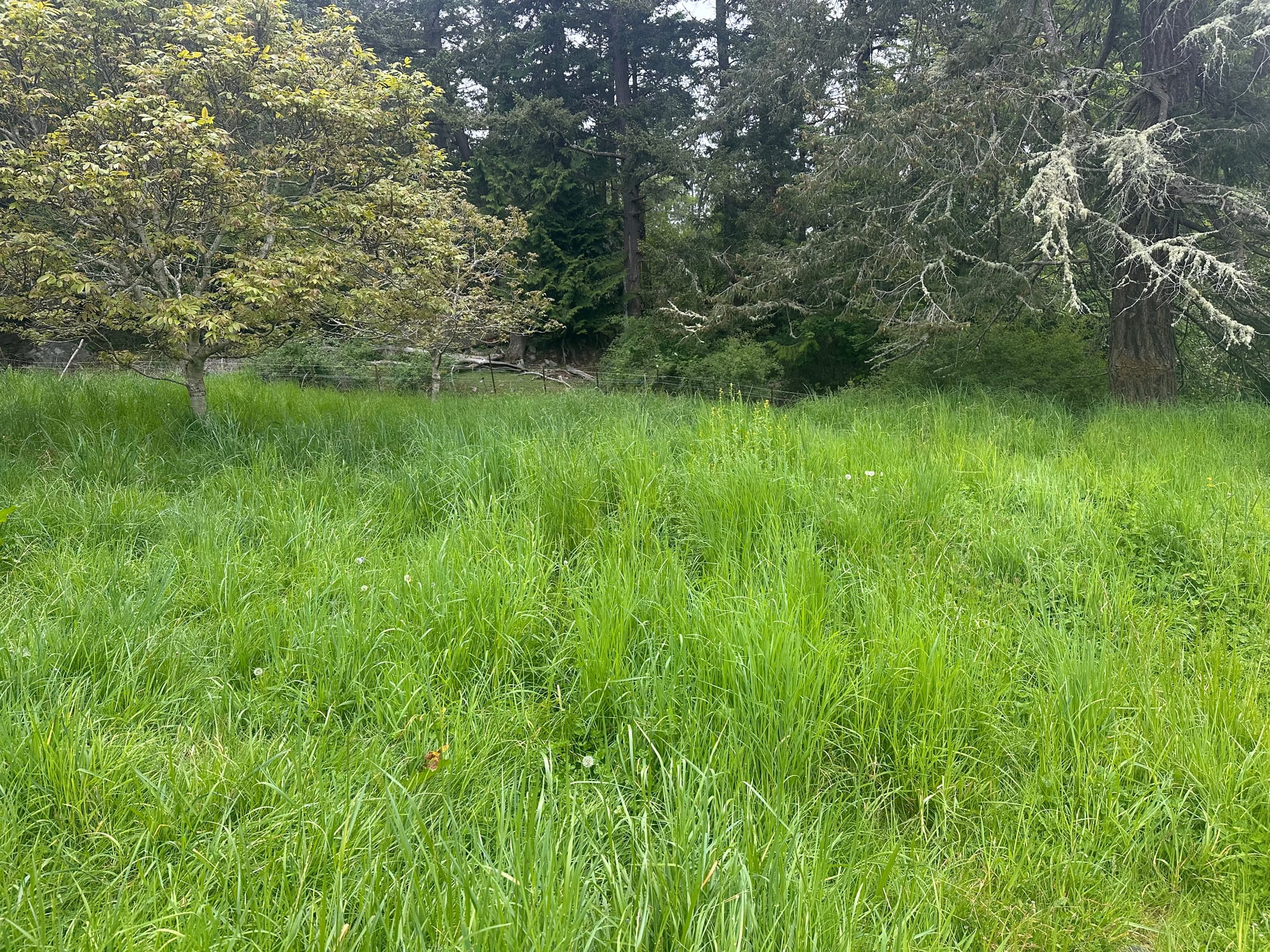
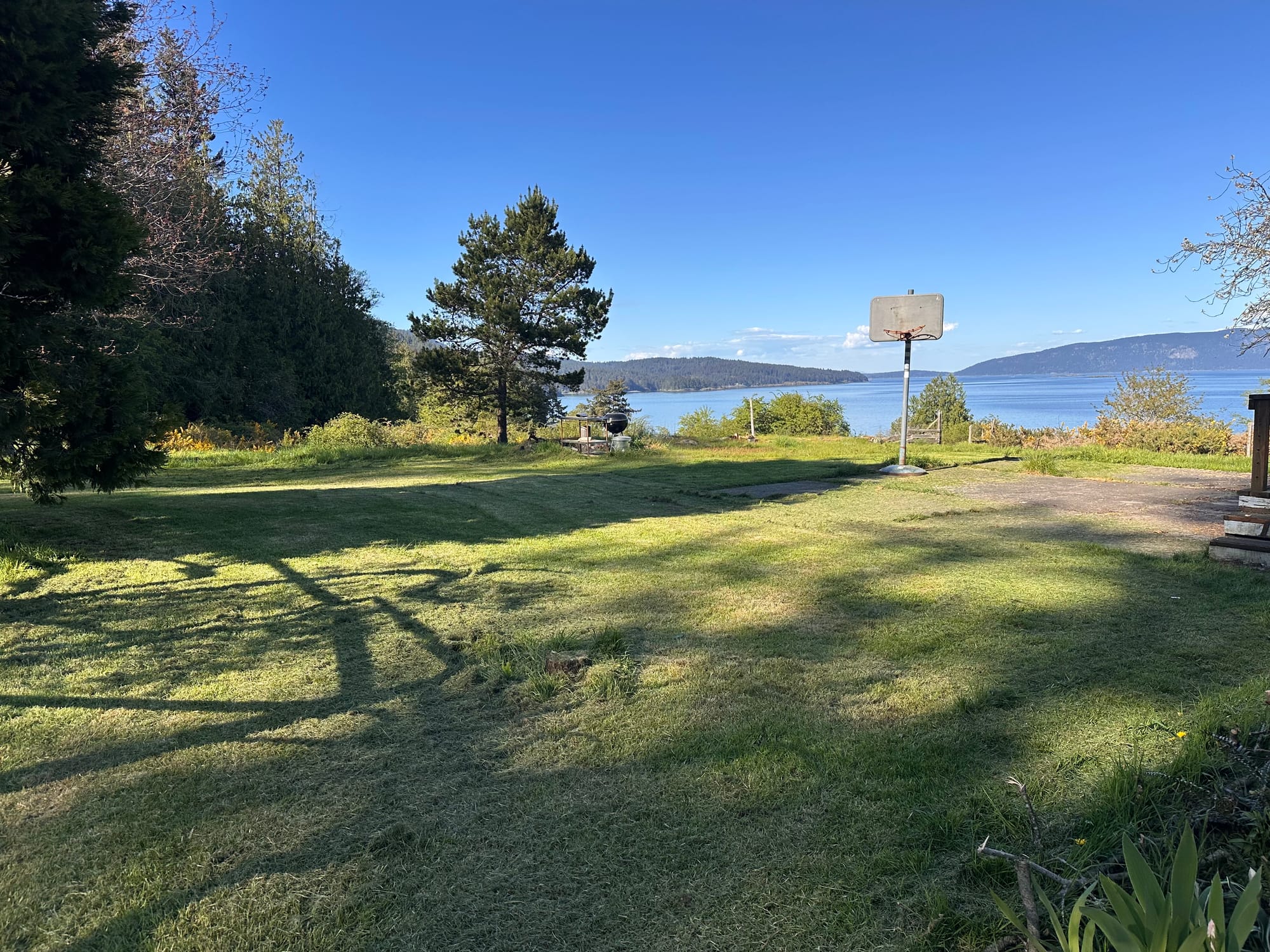
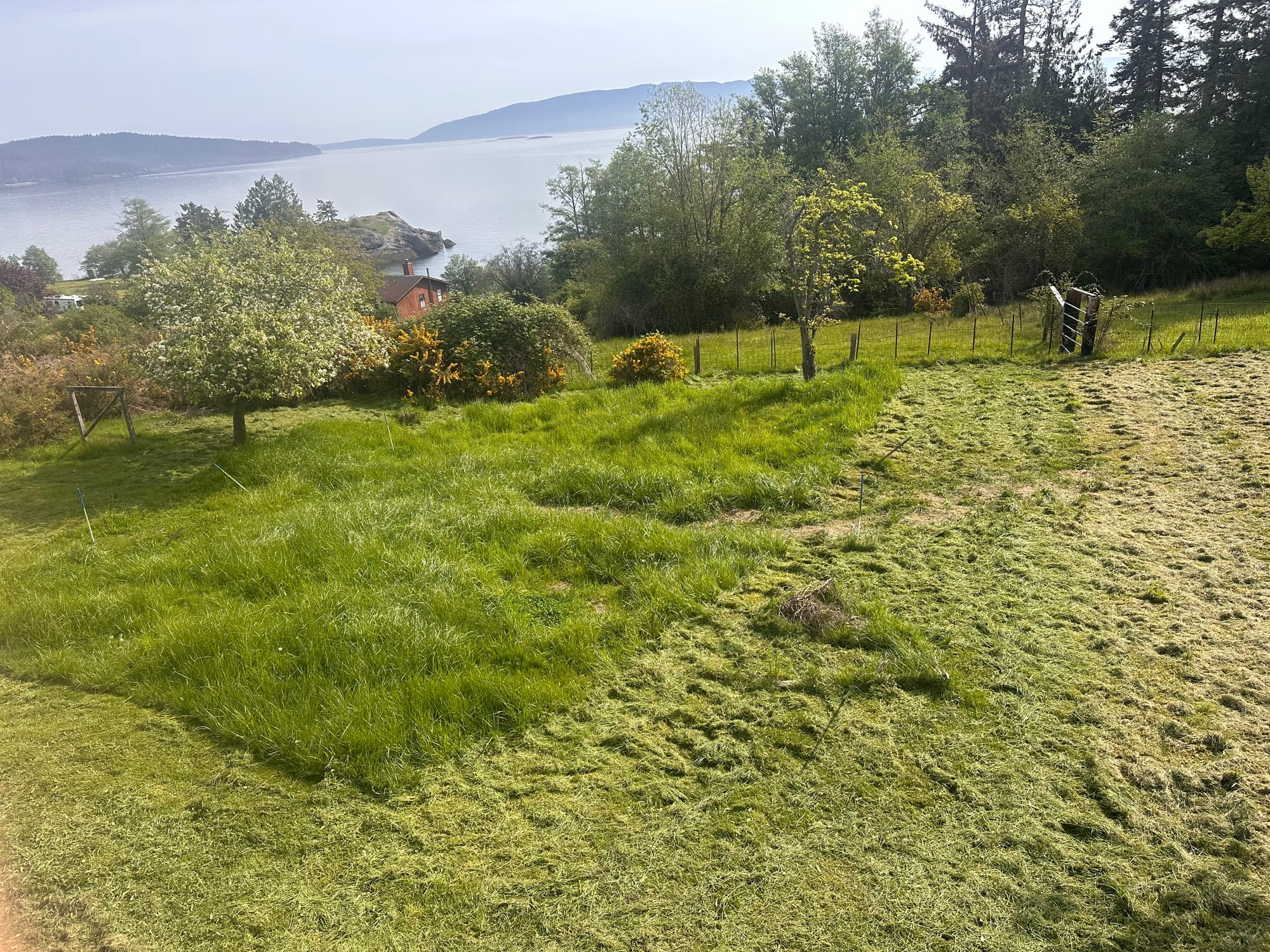
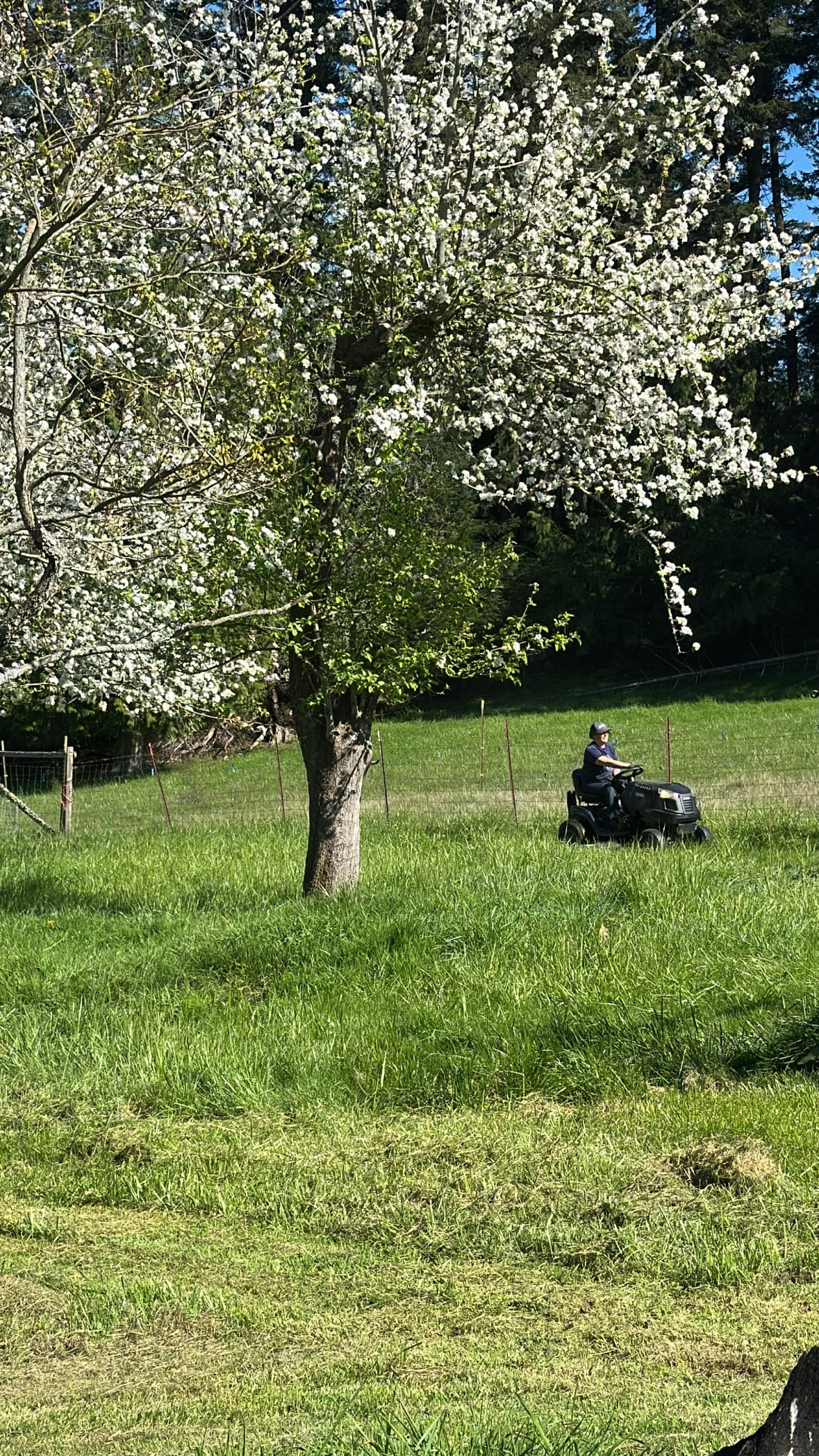
I am amazed by how fast and how tall and how suddenly the grass grows here. As quickly unruly as it gets, there's satisfaction in wielding the power tools that tame it back, and seduction in the smells of cut grass and gasoline mingling together on an obscenely sunny April day. Last summer I acquired a free riding mower, and until a couple weeks ago I wasn’t sure if I had merely relieved someone else from making a trip to the scrap yard. It’s slow, and loud, and has no brakes. It stalls if you try to go from drive to reverse, and the belt to the mower deck is too big and slips off the pulleys unless you get it aligned just right. But after all of those caveats, it has new blades and an engine that started up after several years of dormancy. At the moment, to the chagrin of my right shoulder and forearm, I am spending much more time on the Stihl, whacking at the waist-high grass, flagging what parts of the property will be safe to mow, and what parts are too rocky.
Back in early March, I started a vegetable garden. Gillian built beautiful raised beds out of sticks and branches, which I filled with topsoil and compost. First I planted lettuce and arugula seeds, then some brassica starts given to me by neighbors, then kale starts, and carrot and radish seeds. It’s very much a “first pancake” of a garden. The soil is shallow and lacking in nutrients so that some of the brassica already bolted, and the lettuce and arugula are stubbornly regressed in their sprouting stage. I don’t know if it’s birds, cutworms, or slugs that are eating the curly endive, but I will consider it a success if I end up with a few carrots and radishes. The potato plants, retrieved from my Hilary and Hank’s compost, show the most promise.
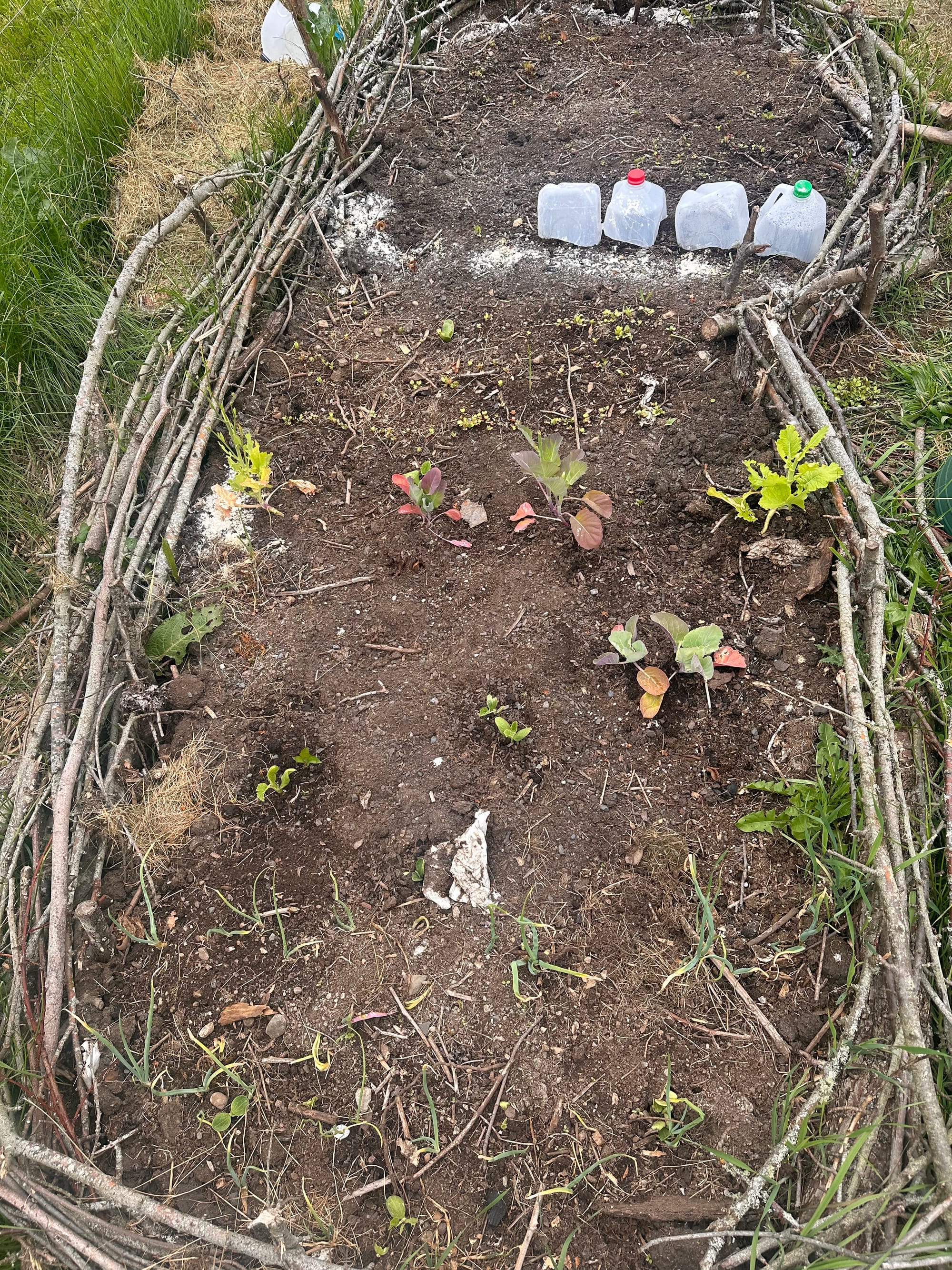
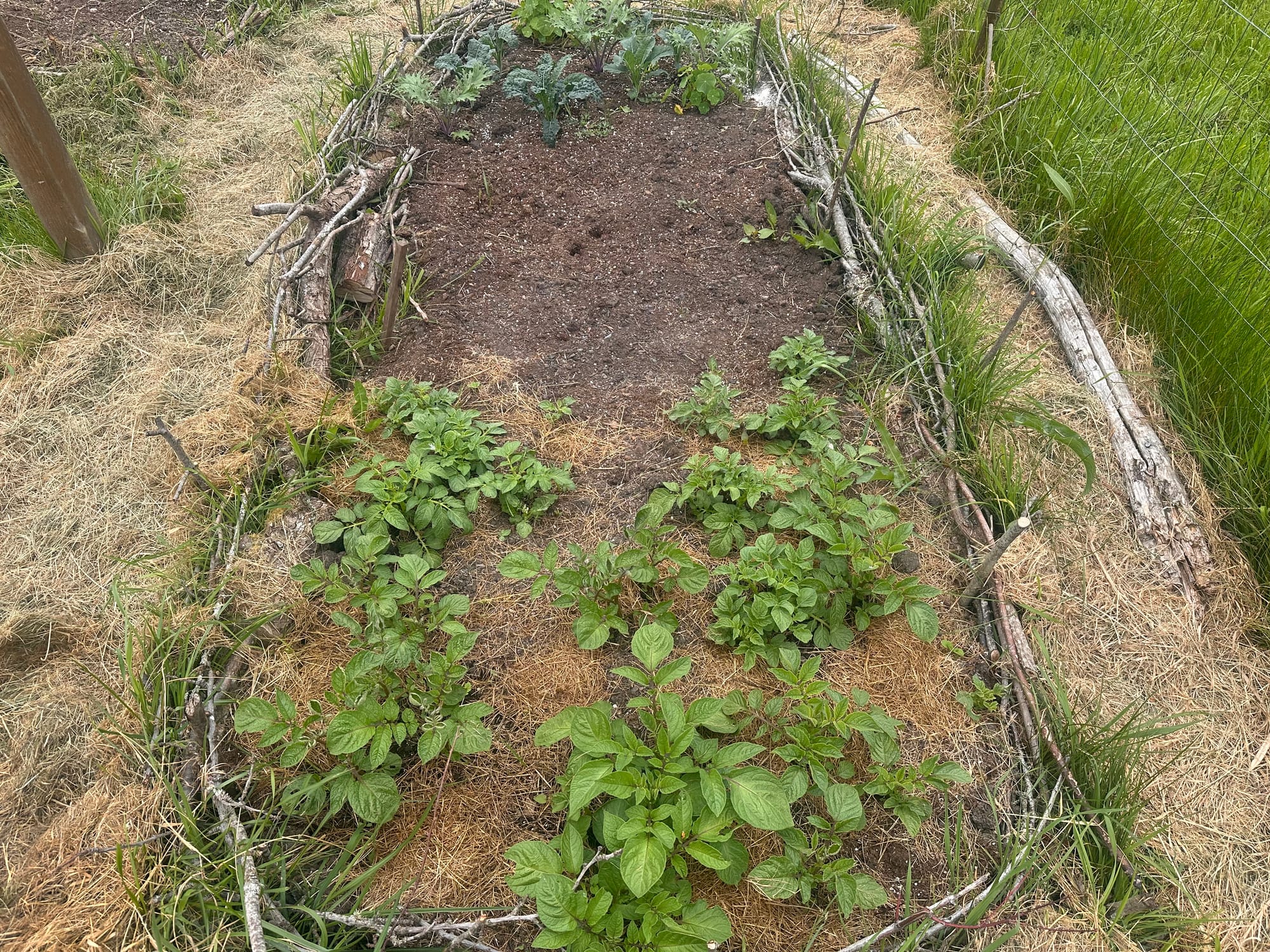
It’s advised that keeping a gardening journal is the best way to learn from your successes and mistakes. I’m weeks behind in cataloging what I’ve planted, and when, but trying to grow food without an ample supply of water is a bigger problem than lack of documentation. With the rainy season over, my 50 gallon water drum went dry fast, and it’s back to filling and hauling 7 gallon blue cubes for the time being. After eleven months of trying to convince everyone reading this that living without running water or a septic system “isn’t that bad," I’m now the one who needs a pep talk. I knew with certainty that I could survive a winter here without hot water, central heating, or an indoor toilet. I now have less certainty that, on a psychological level, I could endure another. The last eleven months have created more enchantment with the terroir, more attunement to the rhythms of nature, but less enthusiasm for continuing to live like Laura Ingalls Wilder.
No one wants to see this on a motivational poster, but sometimes success hinges on knowing your limits. And, just as my delicate sensibilities are reaching theirs, there’s a glimmer of light through the tunnel. The septic build begins next week. The Doe Bay Water Users Association has my membership fee. The Big Things, water and septic, are slowly falling into place, even if a sense of completion feels a long way off. If anything, I am seeing, for the first time, the rest of the punch list: fixing the plumbing, replacing the water heater, cleaning out the crawlspace and replacing the failed support posts, digging curtain drains, and building a bathroom in the cabin. “Patience and persistence” is the advice S.N. Goenka gives to meditators at the Dhamma Kuñja. I gaze out the window and contemplate all of the tasks, in addition to the too-tall grass, the invasive bramble, and the ever-sprouting ragwort, and remember that there is no end-goal here. "It all ends in tears", Clayton, who lived here last spring and summer, loved to say. May we get to choose tears of joy.
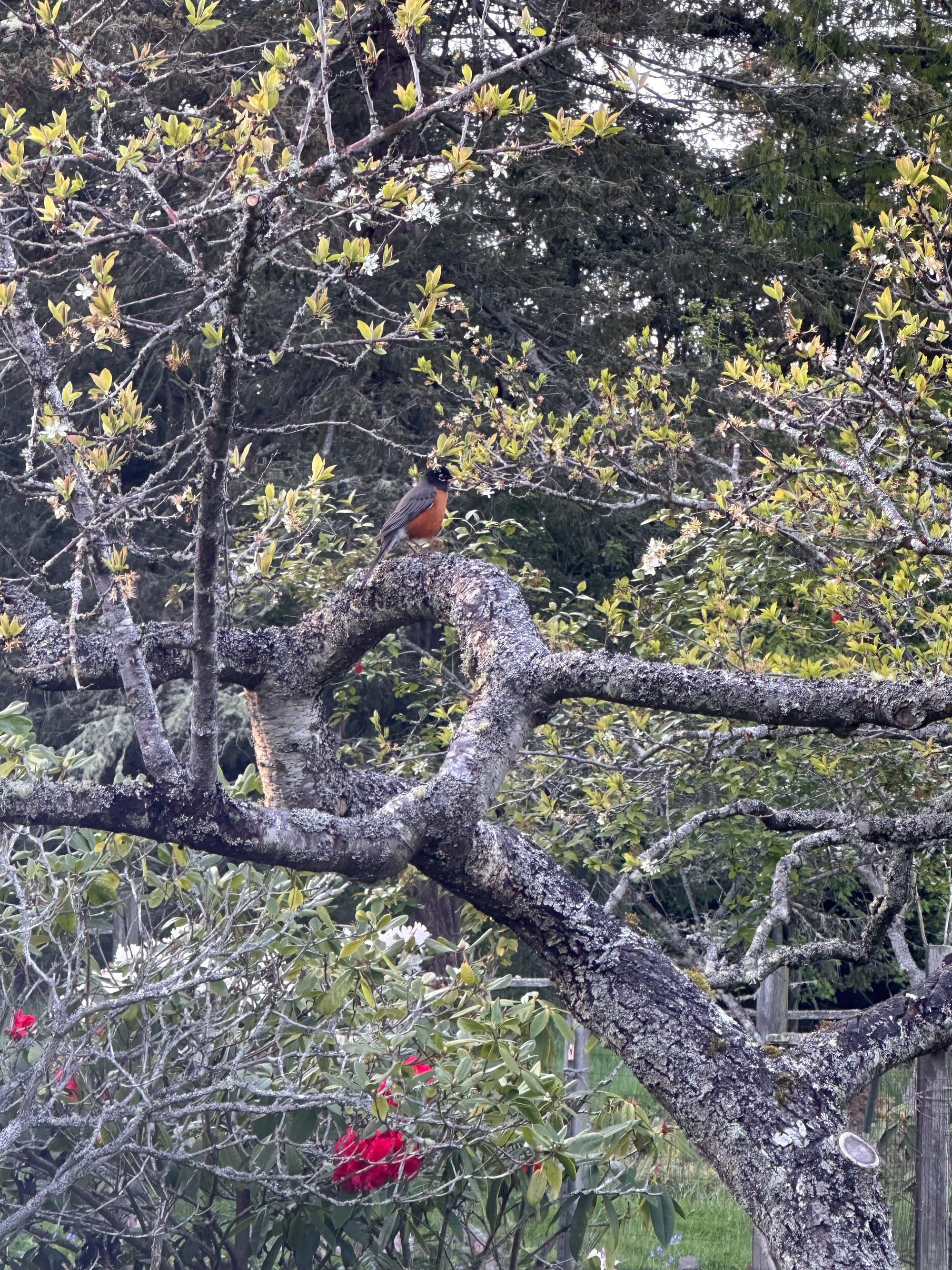
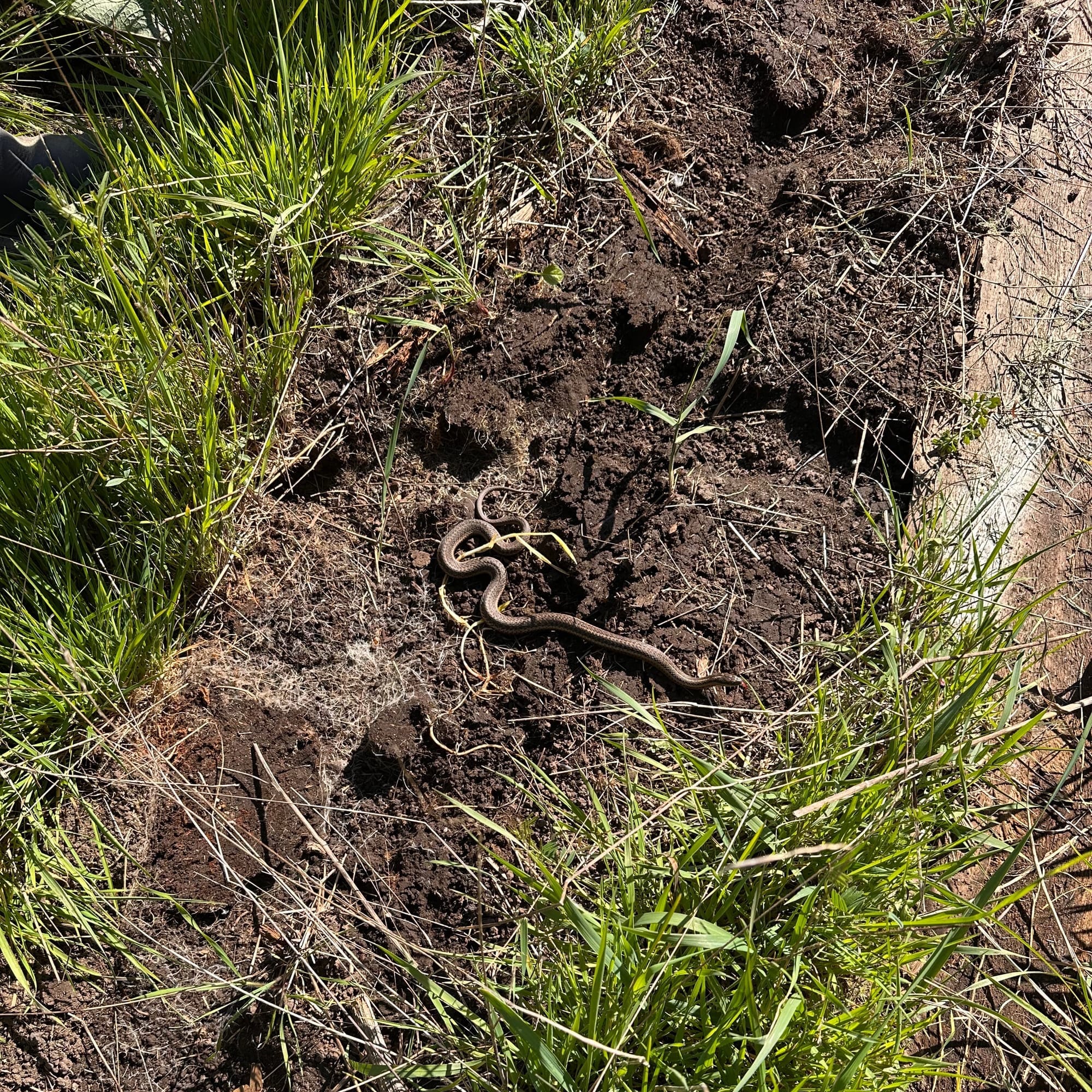
Summer is practically here, and it feels like I didn’t get a chance to write about spring. So many things arrive between the end of February and May. The deer, the birds, the snakes, and finally (big sigh), the tourists. The 2026 award for "thing I didn't realize I loved until it returned" goes to turkey vultures. Last month I started noticing them nesting on the side of the hills off Olga Road. Seeing them circling the skies over the property again I felt reunited, much like the night time sounds of croaking frogs in the pond and pastures beyond the house.
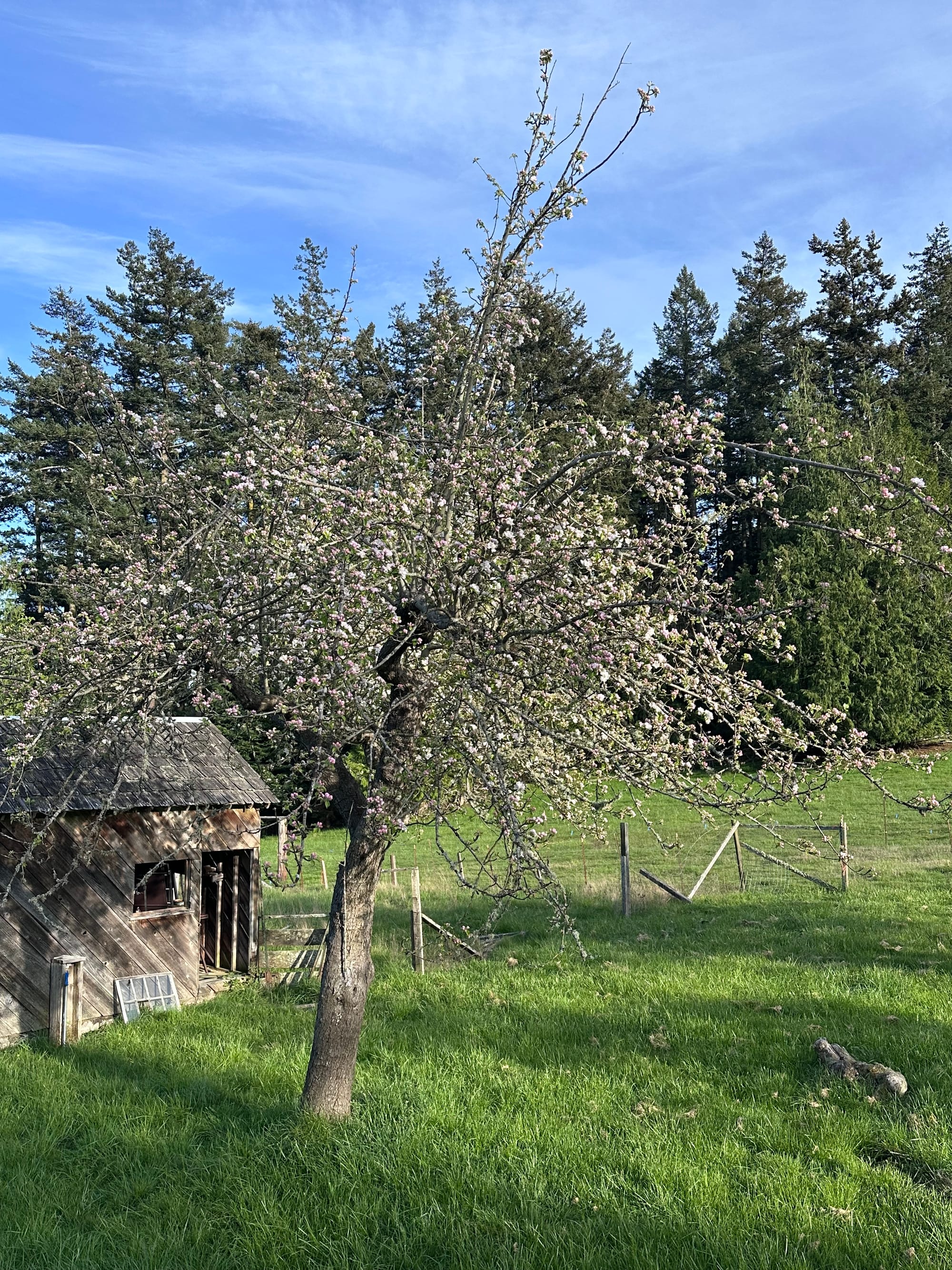
There have been, and continue to be, so many cycles in progress, but one of my favorites this year has been the foliation of the old apple trees. The apple trees outside my door have lapped more than a century’s worth of winters, taking their beatings, losing some limbs, but remaining rooted in the ground, which is no small feat considering the rains and winds here direct everything towards movement and impermanence. They have watched me pee on the lawn and trudge to the outhouse, slide in the mud, and battle the ragwort with futile effort. In the 11 months I’ve been here, I’ve watched the apple trees in their broad-leafed plumage, bear fruit I first took as inedible but with enough time produced bushels of distinctively tart and juicy apples, most of which were too high to harvest and eventually went to the yellow jackets and rodents.
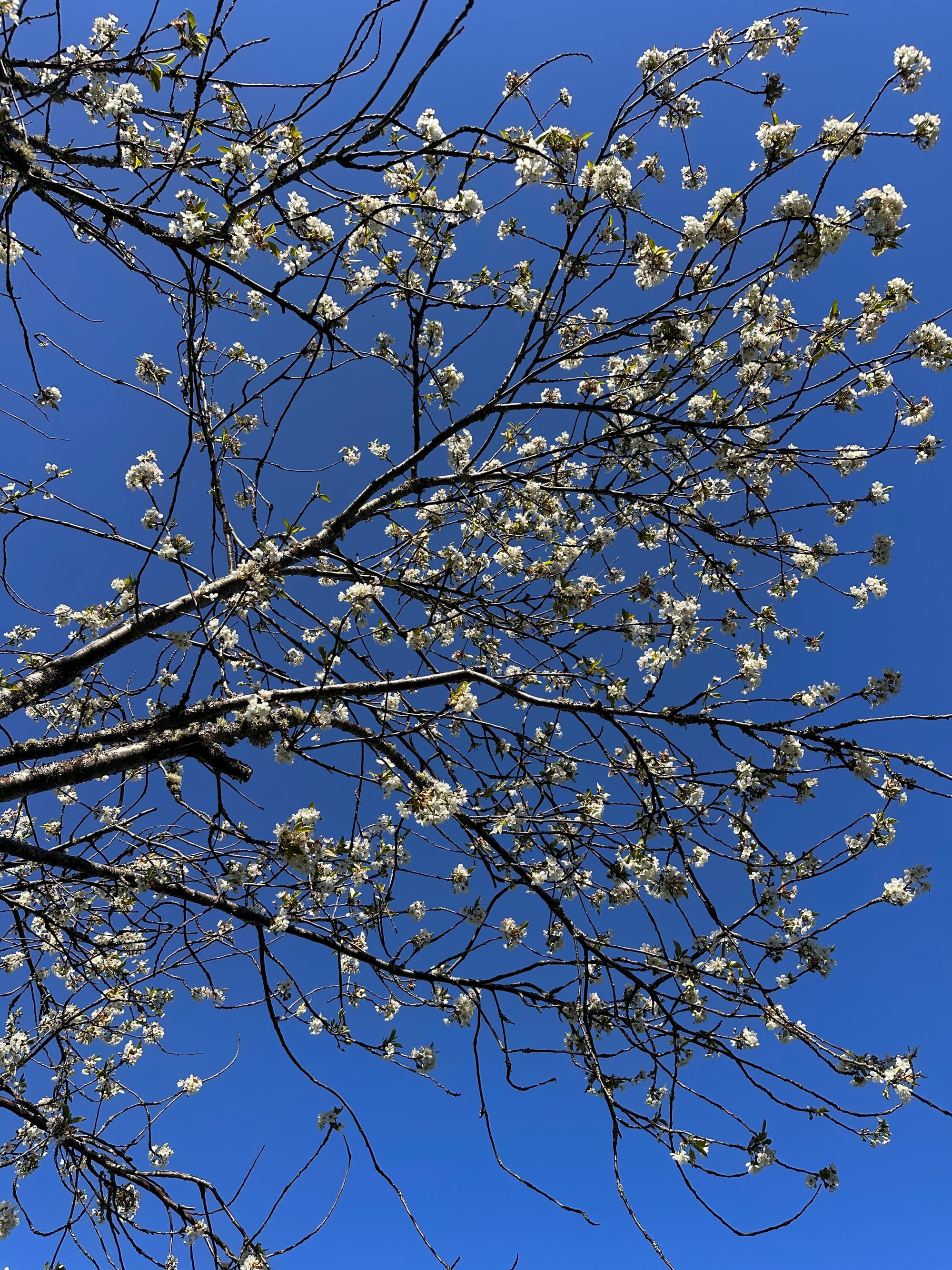
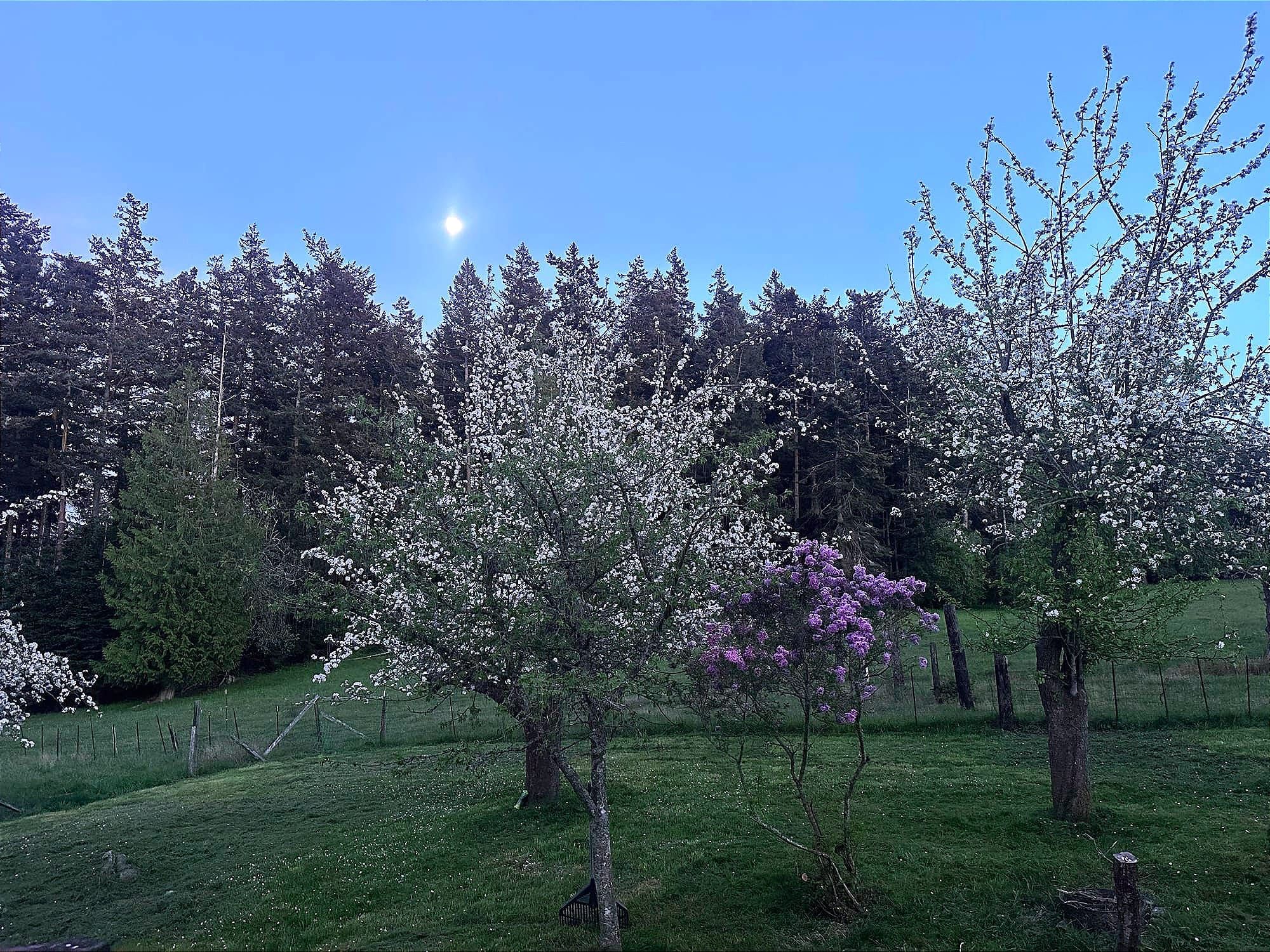
The apple awaken from winter later than most of the other fruit trees. Everything about the buds, from their pink-and-white blush to their perch on gnarled branches reminds you of something vintage; inspiration for china patterns, bed linens, and girls’ underwear. Alone, they are worth the marvel, but the next day the buds are even plumper, and the next day the bud-to-flower ratio has shifted, and then the next day they're full-on snow-white blossoms. The lilac is now in full bloom and the laburnum is starting to come alive with its celadon leaves, and the whole tableau is hyper-pigmented. And when you think you could not love or appreciate the beauty of change within continuity, or continuity within change any more than you do at this moment, you feel the vibration and hear the buzzing of dozens of bumblebees, and you see their fat, fuzzy forms floating around under the canopies of the trees. And even as you take it in, the blossoms of the 100+ year old apple trees are shedding their petals. It's a lesson that nature keeps teaching, because we need to keep learning it: everything that is becoming is also ending, and vice versa.
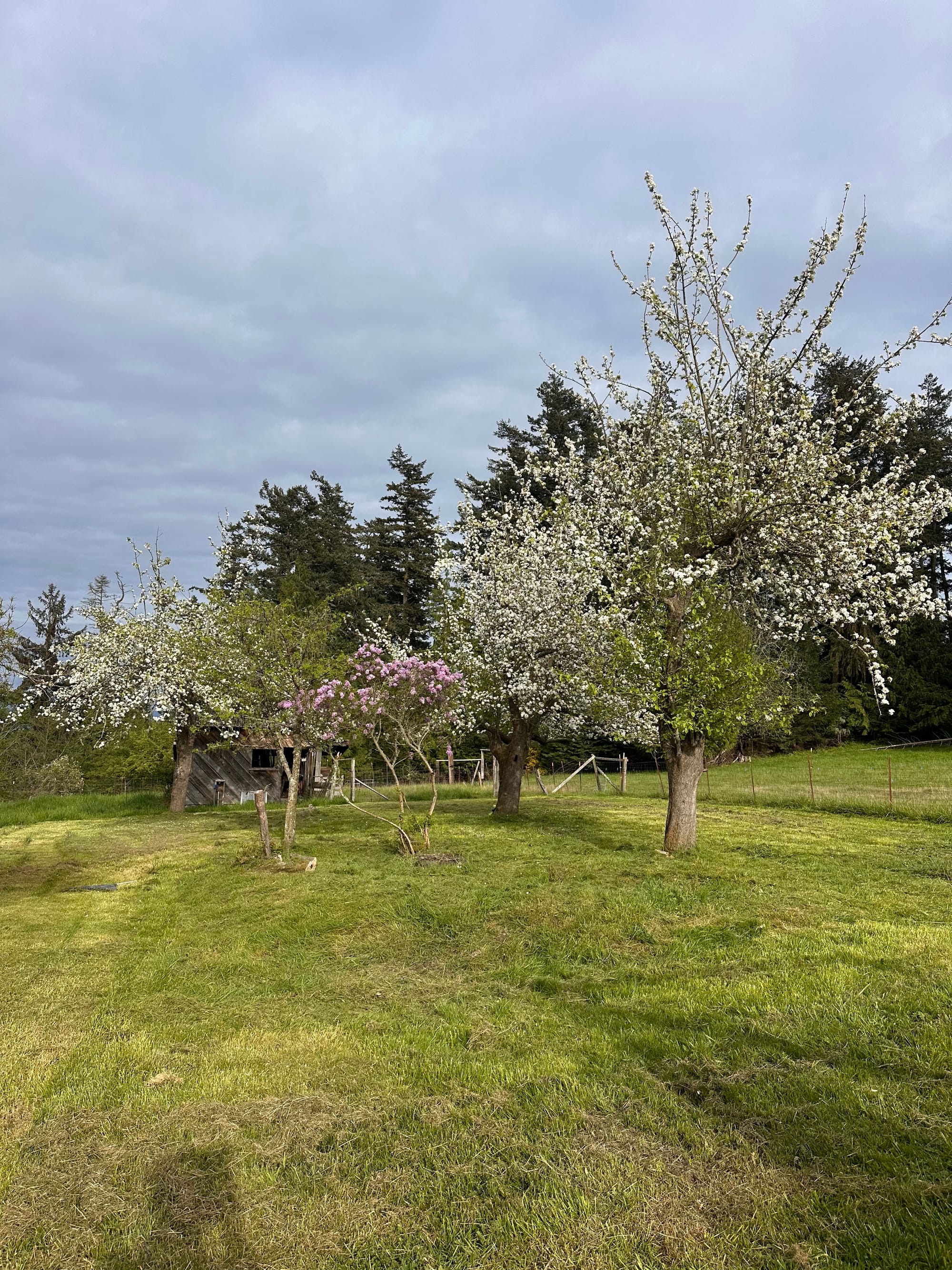
Beethoven’s 9th Symphony has been in my head all spring. It's ceremoniously played at New Year's Eve, a tradition that kicked off successively in Germany and Japan right around the end of World War I. Germans performed it at New Year's until the Nazis banned it in 1933. In Japan, it allegedly gained popularity as a result of German POWs forming their own orchestra at a detention camp in Tokushima in 1918. Japan's national broadcasting company began playing it on New Year's Eve around 1922. From there, it became a New Year's tradition in Japan. I am finishing this entry on May 7th, which I just learned happens to be the 202nd anniversary of the 9th's premiere in Vienna. Like finally understanding an obscure song lyric, I now realize spring is indeed the most potent time of year to listen to this symphony, preferably on Orcas Island, and to appreciate each movement in relation to the season, from the first movement’s arrival and whirling exit, the force and repetition of the second, the gentle surrender and mounting power of the third, to the over-the-top choral explosion of the 4th movement. Ode to Joy all the way.
If you enjoy reading Bucolia, consider supporting my writing and my goal of creating an artist residency here through a paid subscription. You can also support Bucolia by simply sharing this blog. Thank you!