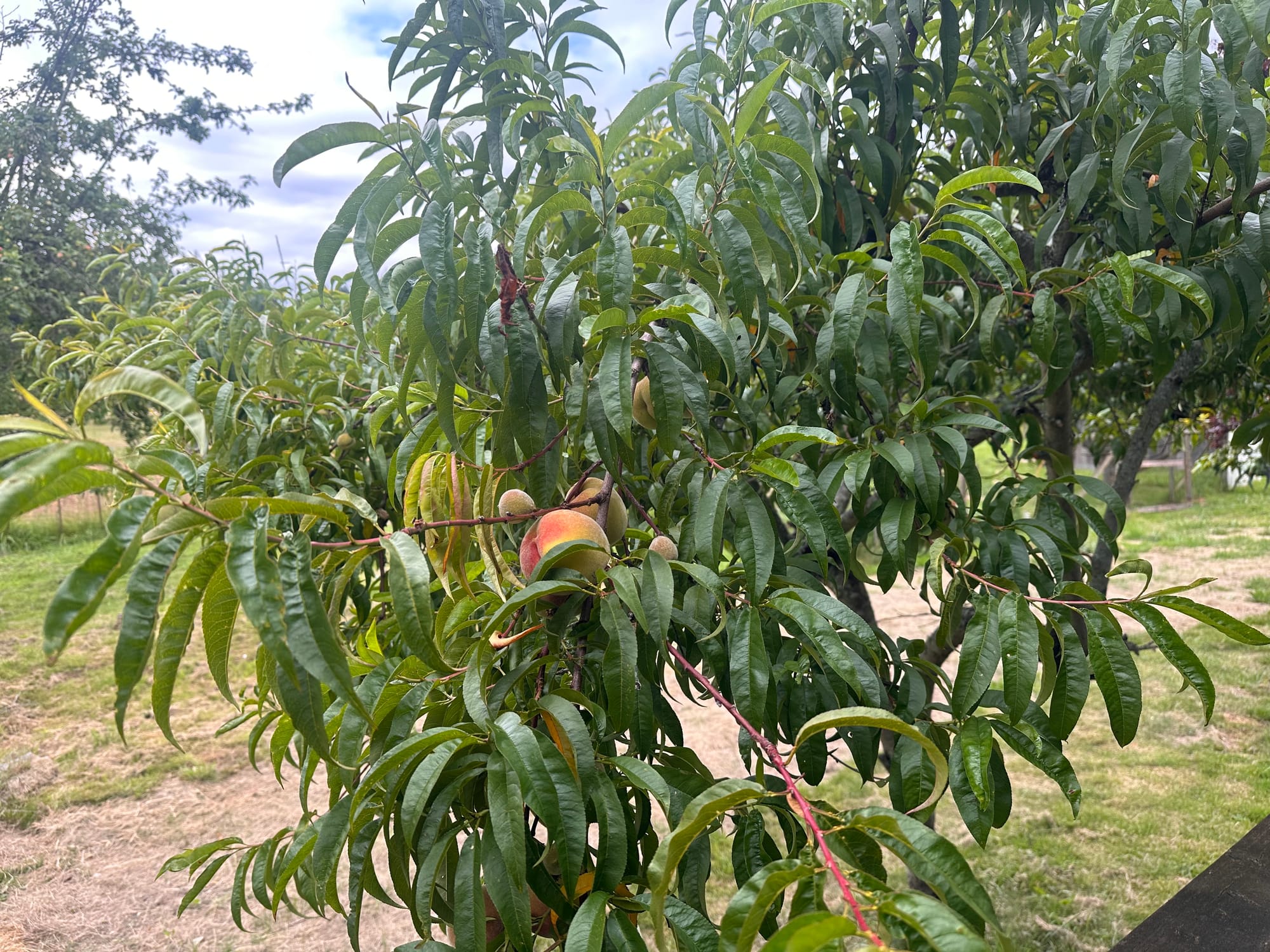
Fruit vs Fruit

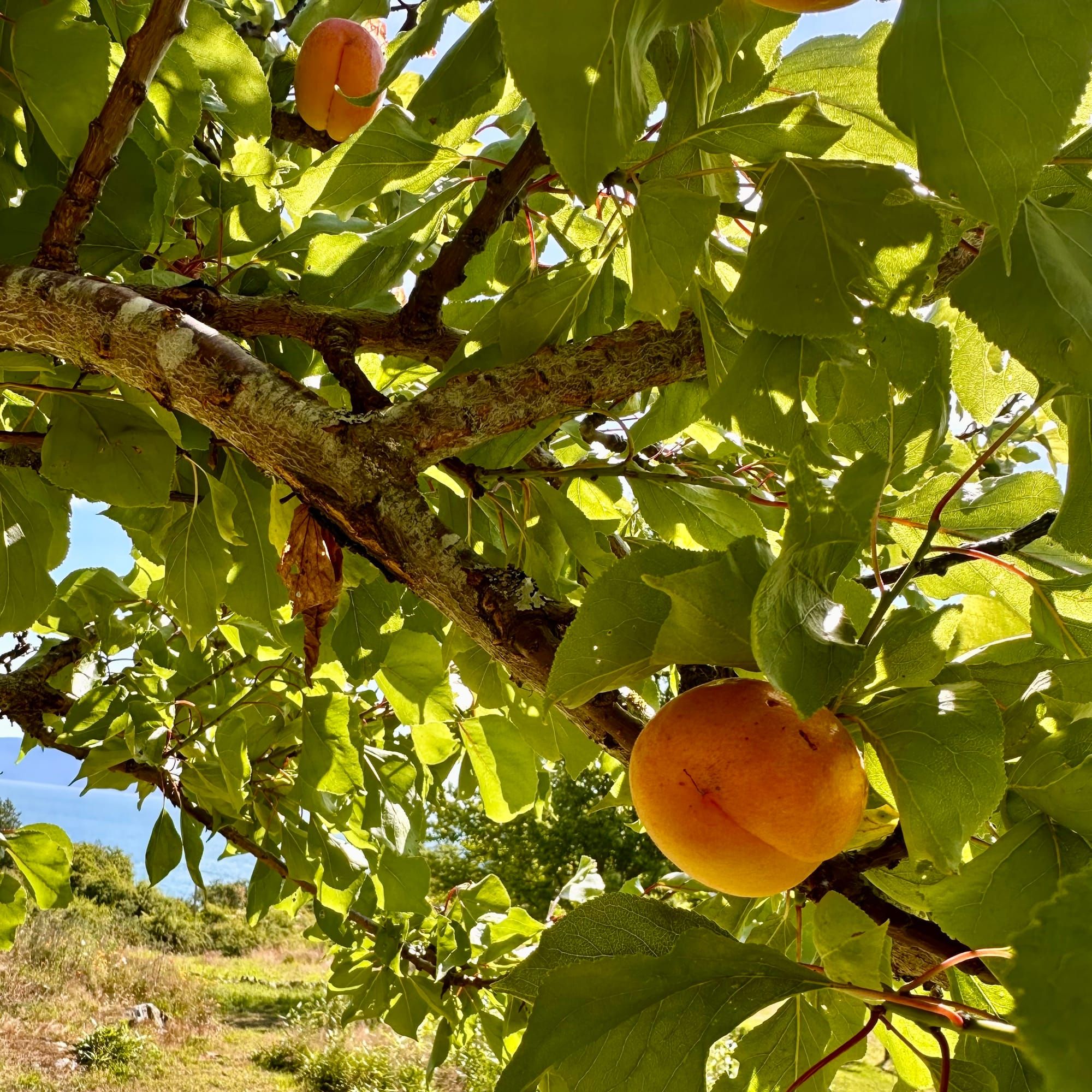
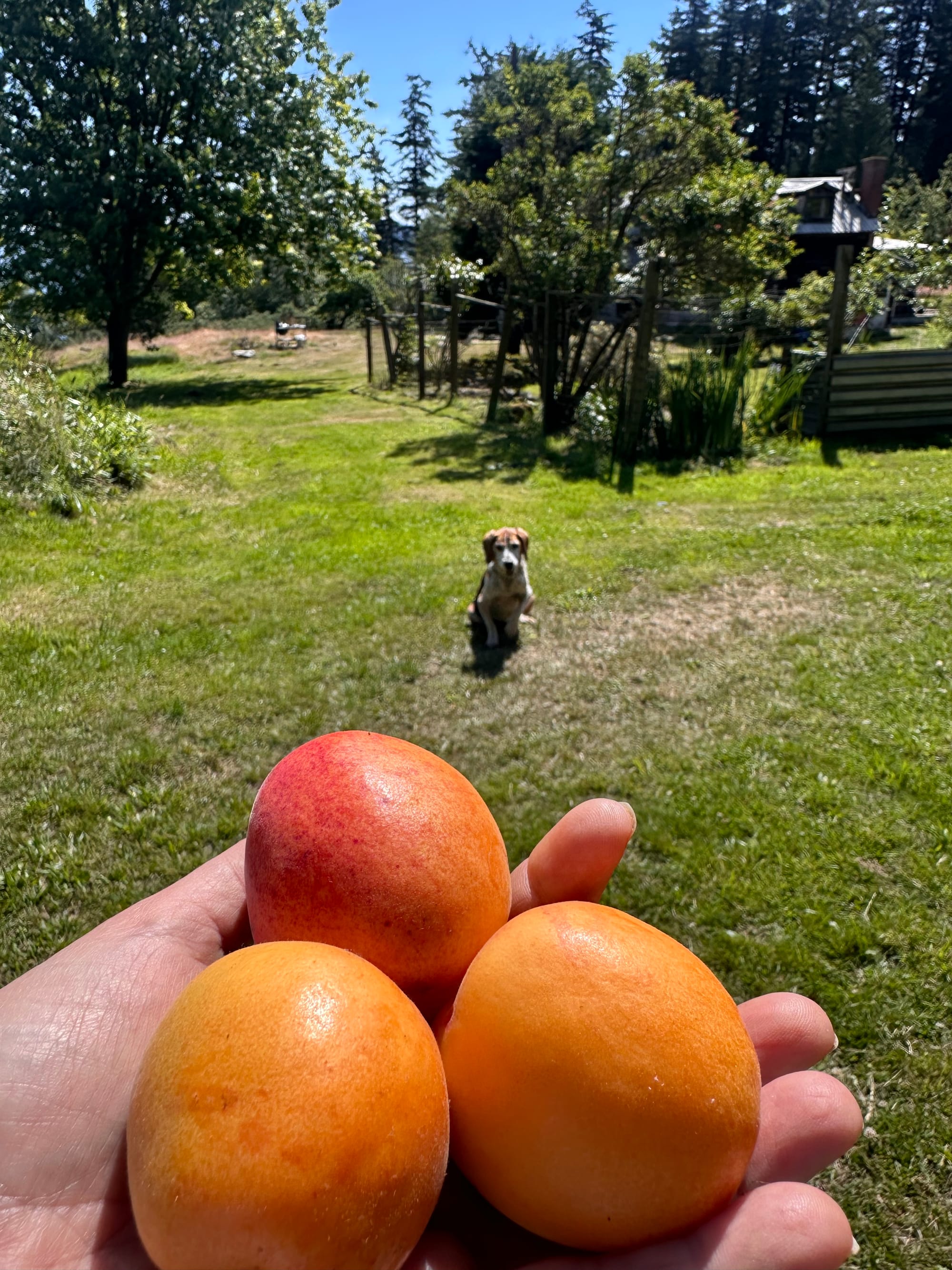
On Tuesday, I picked three apricots. Fat, orangey-red, and only minimally pocked, I spotted them about 4 days prior, growing in the smaller of the two apricot trees, the one that flowered more prolifically back in March, the one I pruned less aggressively because of its size. Despite the latitude, despite the lack of accessible water, despite all the knowledge that I currently hold about vegetable gardening, fruit tree husbandry, and land maintenance fits into couple paragraphs every couple months, I just picked three beautiful apricots. They weren't all the way ripe, and they don't really ripen more after picking, but I wasn't willing to risk losing them to birds or raccoons. They were ripe enough to deliver more apricot-y flavor than any other fresh apricot I've ever tasted, but just shy of their juicy, sweet potential. Maybe next year. Yesterday, I found one more apricot on the ground. This one had reached all of its potential, but had paid the price with some bite marks. I'm not embarrassed to eat bruised, fallen fruit if it tastes as good as that apricot.
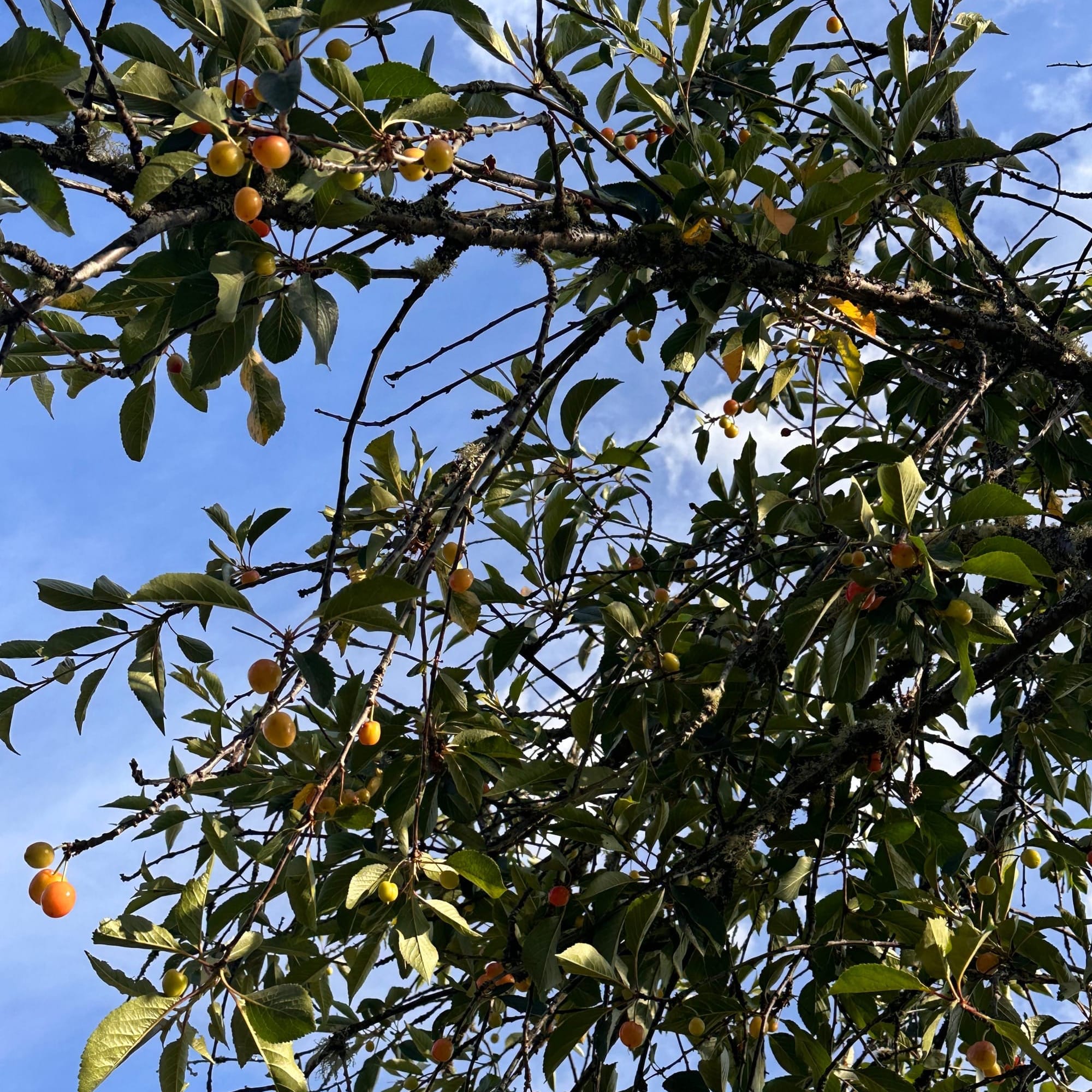
Who knows if the prunings I gave to the apricot, cherry, plum, and peach trees back in February made this yield possible. I can only compare to last year, which is not a great sample set. The sweet cherries I managed to eat before the birds, back in early June did seem a little sweeter. The sour cherry tree appeared to be more prolific. With netting and patience, I could have harvested a whole pie's worth of fruit this year. But watching the burly robins (and a few brave finches) feast on them from my bed in the mornings paid higher dividends in contentment, and that's an even scarcer commodity than fruit these days.
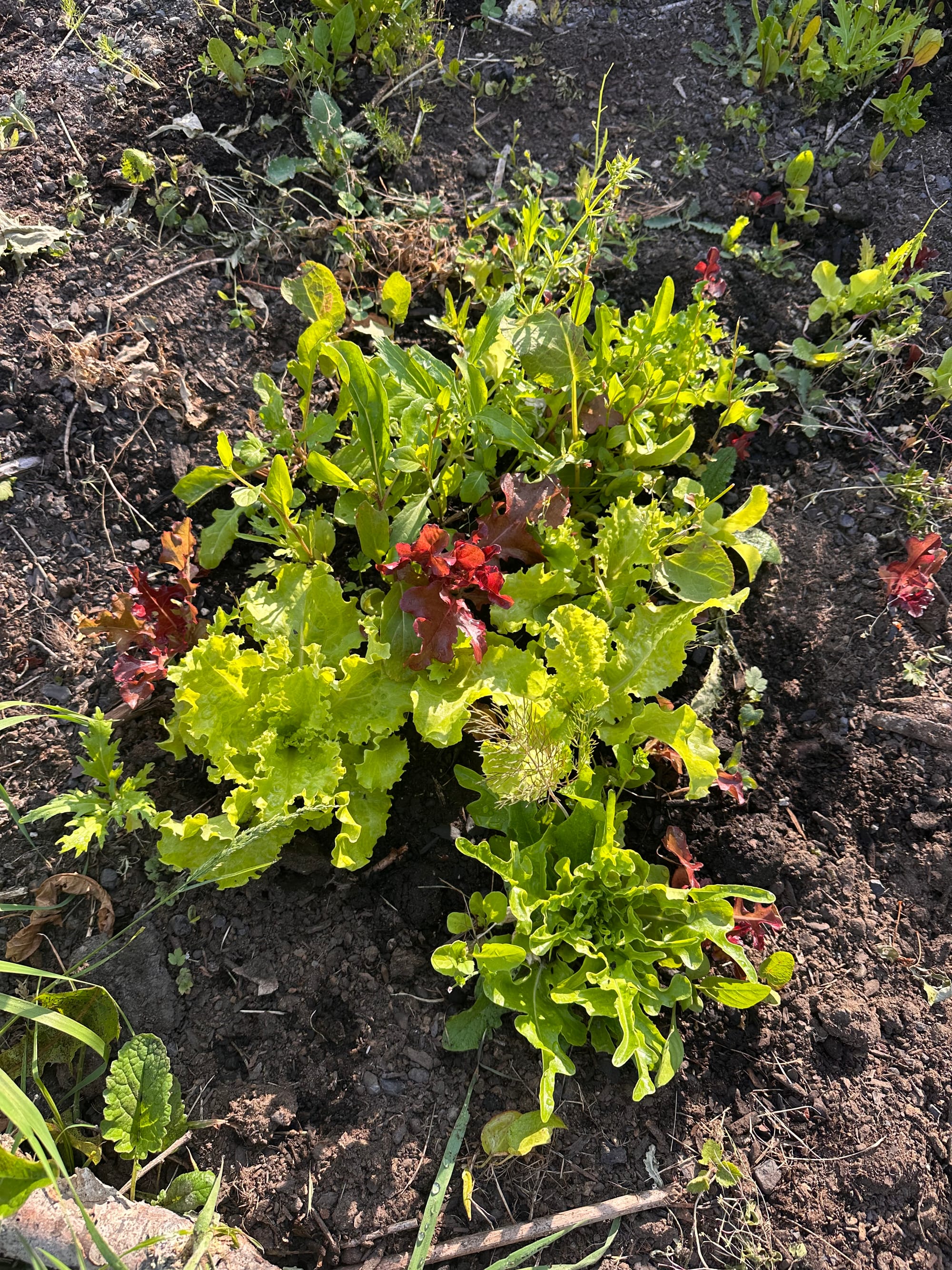
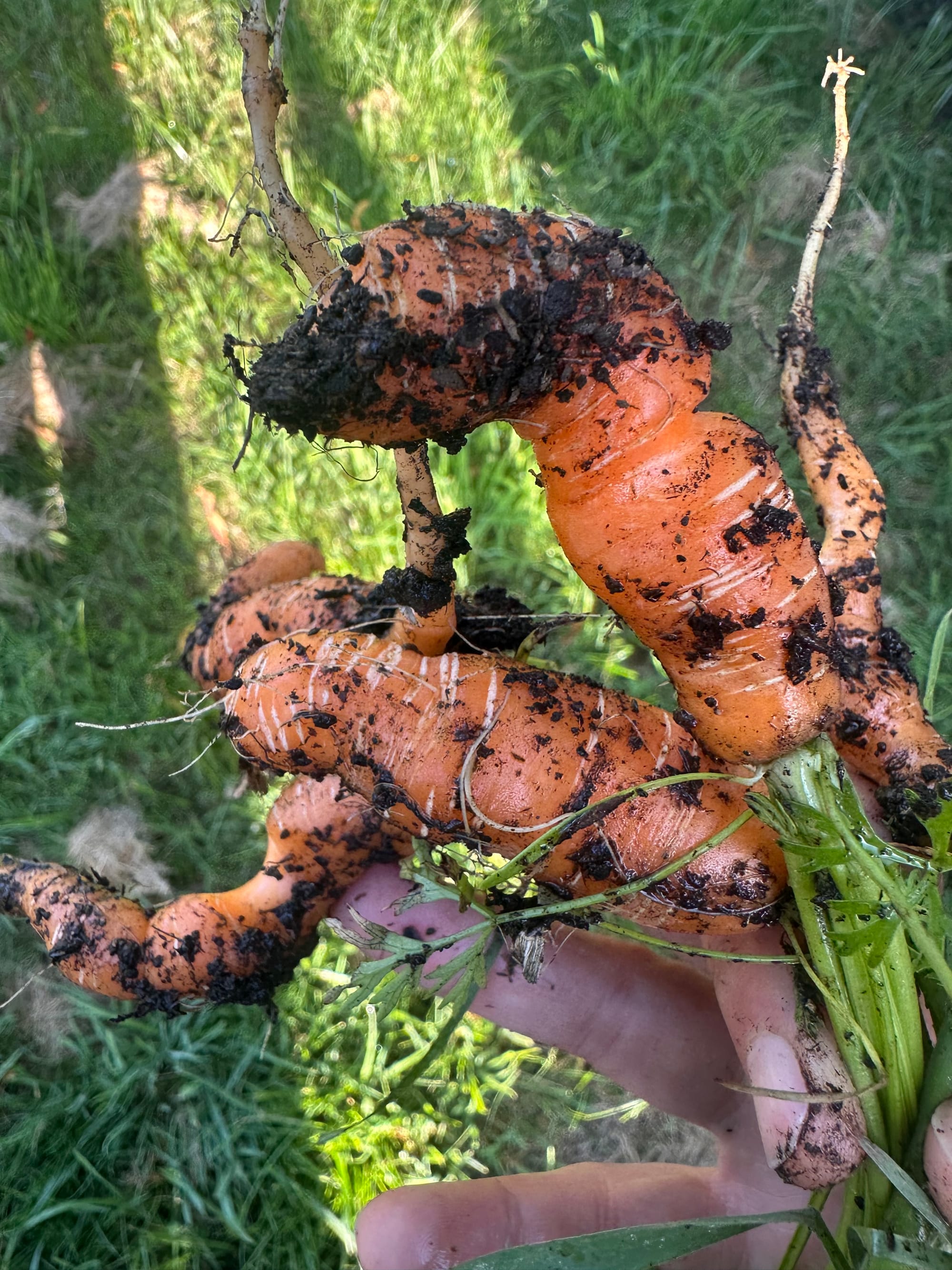
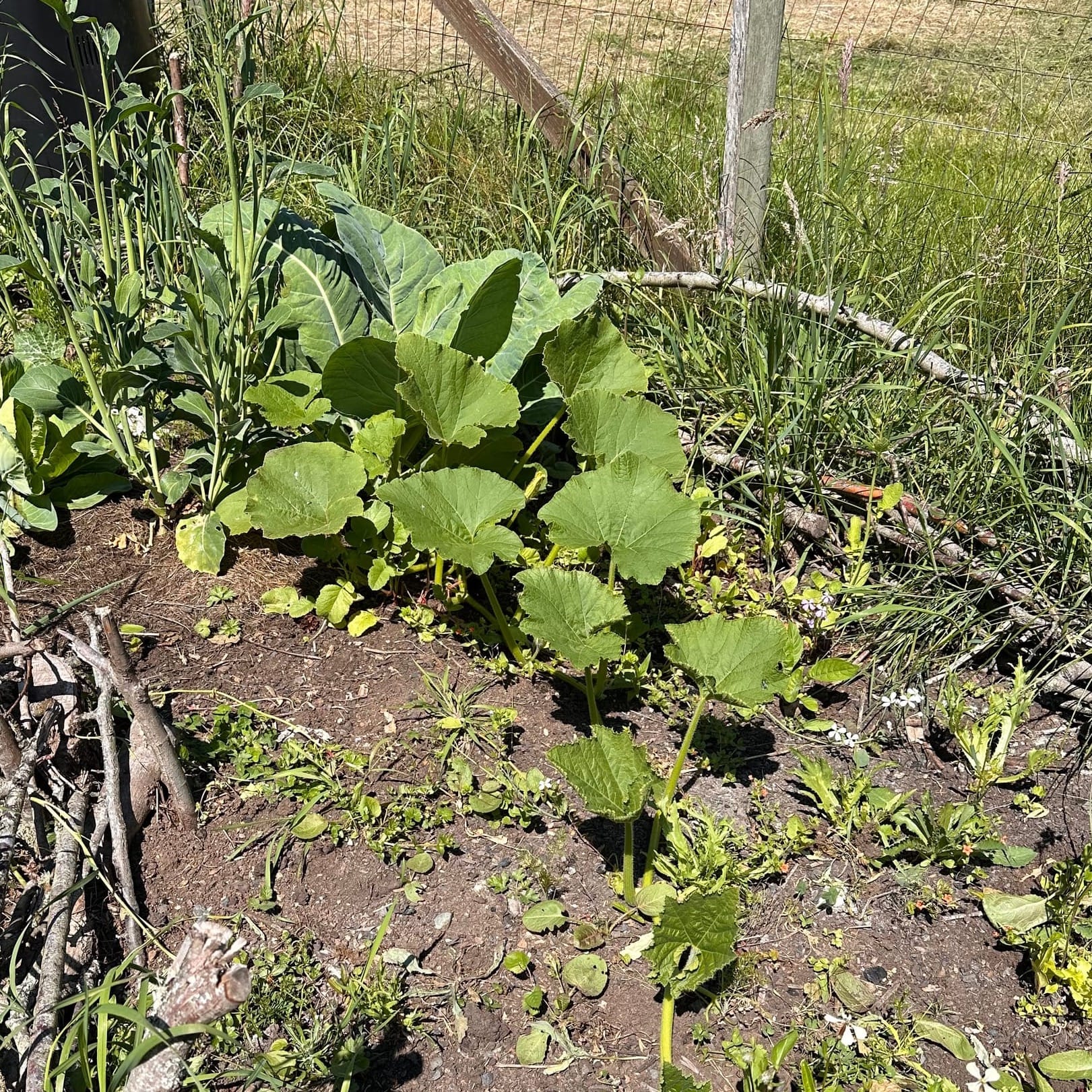
The longer life goes, the more small victories matter, and my small victory garden is feeding me a little more every week. Almost everything I've grown is a lesser, more anemic, or slug-pocked version of its ideal, except for a huge, thriving winter squash that I didn't plant, but must have voluntarily sprouted out of some uncured compost I laid down.
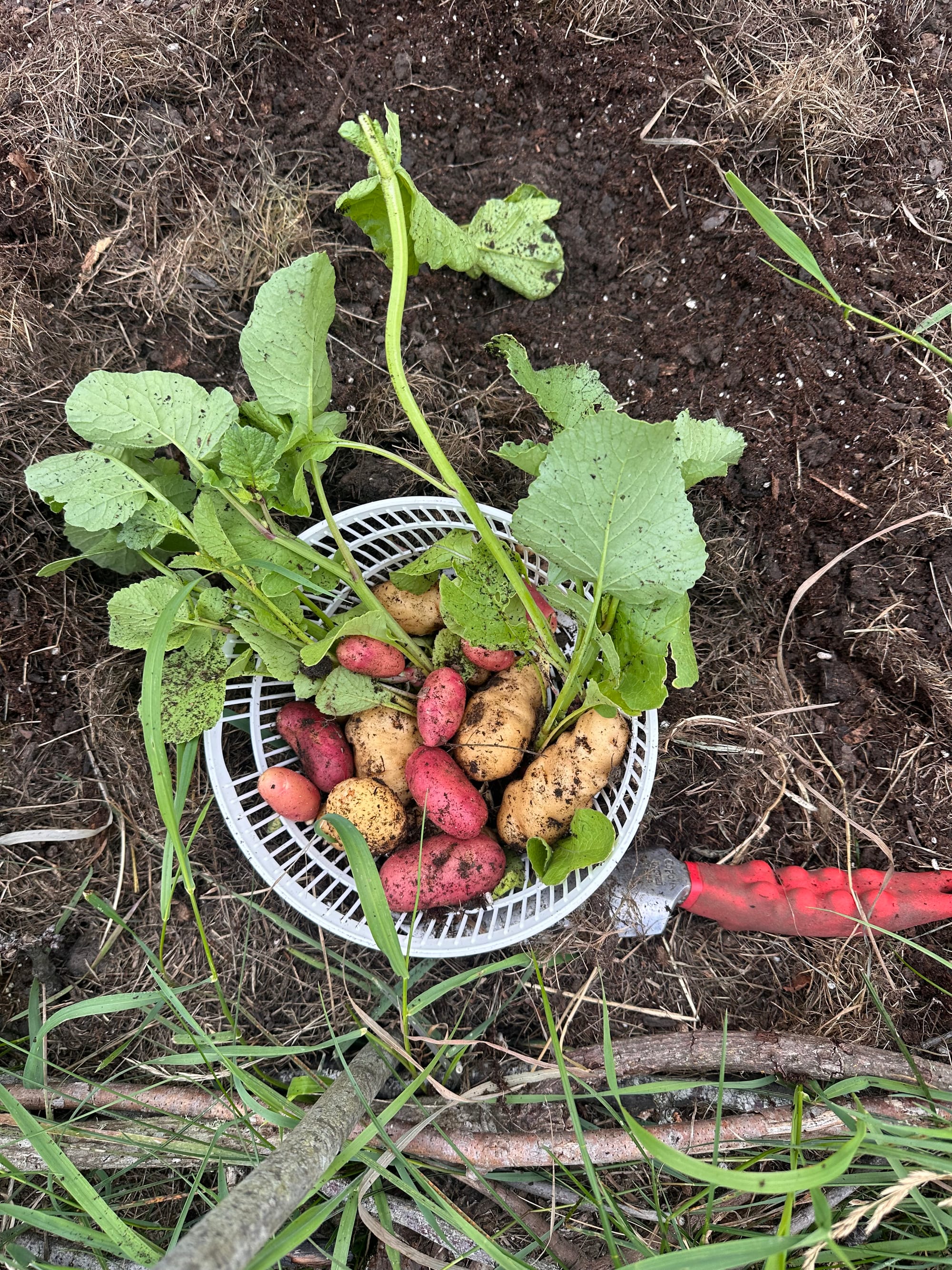
Months ago, neighbors Hilary and Hank gave me a bunch of extra starts: cabbage, broccoli, cauliflower, Chinese broccoli, rapini. Hilary said, "we just threw a bunch of seed potatoes in the compost, you should grab some," and I did. The Chinese broccoli and rapini immediately bolted. Slugs have done their best to kill the cabbage. I will be shocked if a single cauli-flower emerges. But the potatoes!
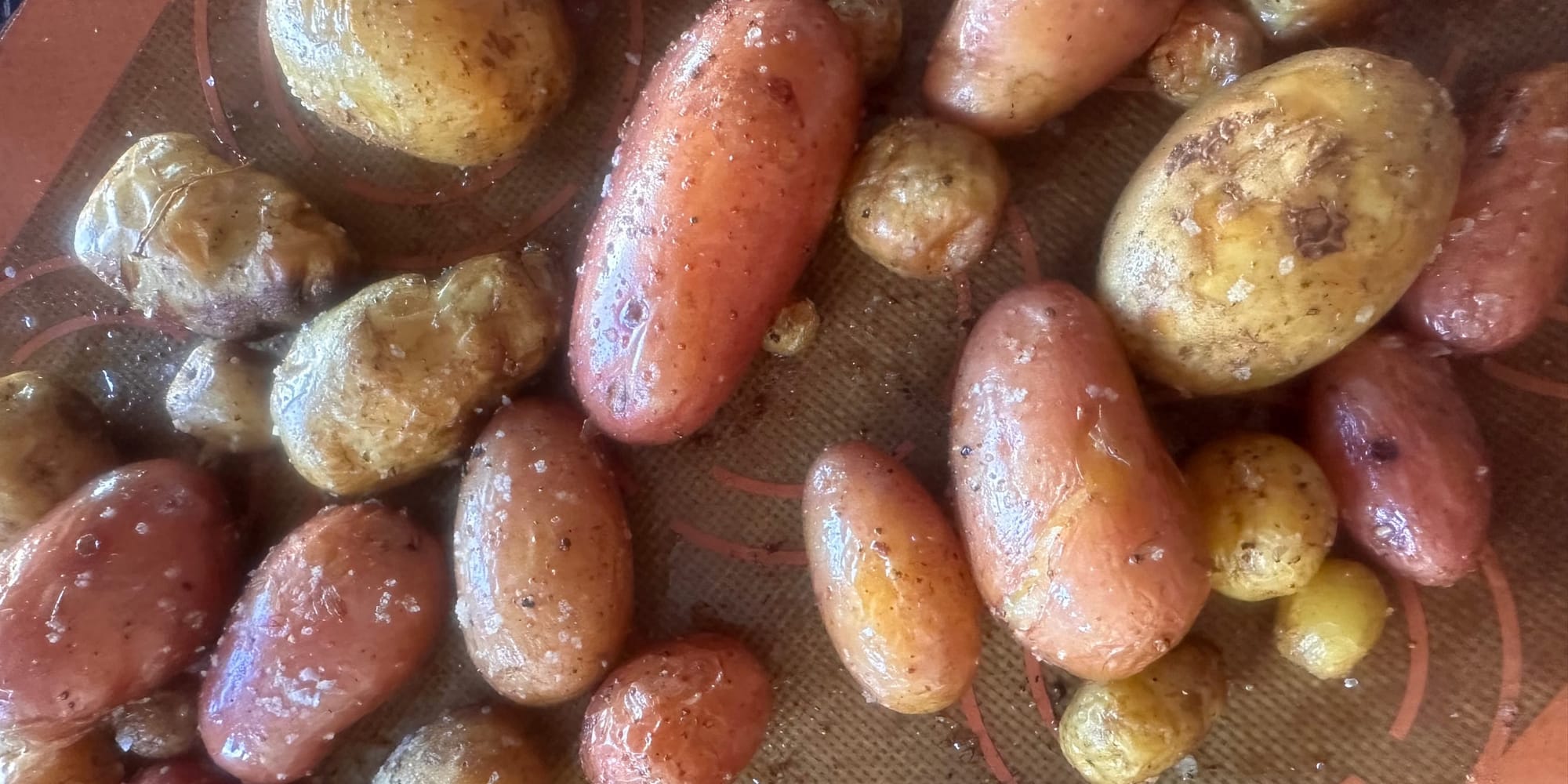
If I had to play f*ck/marry/kill with carbs, if I was forced to give up either wheat, rice, or potatoes for the rest of my life, I would agree to never let another french fry touch my lips if it meant I could still revel in steamed white rice with butter and salt, or twirl a forkful of Bucatini all'Amatraciana. So in my top-ten list of dream vegetables to grow, potatoes have never made the cut. Before this garden, my assumptions of potatoes were that their great value is to serve as vehicle for fat and salt, and differing properties make them amenable to different preparations. Generally speaking, red potatoes are for boiling and sometimes roasting, yellow are for boiling, roasting, frying, and sometimes mashing, and russets are for mashing and frying. I have yet to find a successful preparation for purple potatoes, which used to regularly show up in my Portland CSA. But the potatoes that have come out of my soil this spring are a astounding. Red and yellow, roasted with only a little olive oil and salt, they are all the words: creamy, earthy, nutty, and thoroughly je ne sais quoi-sy. I just dug up the last of them and all I can do now is think about next spring's plantings.
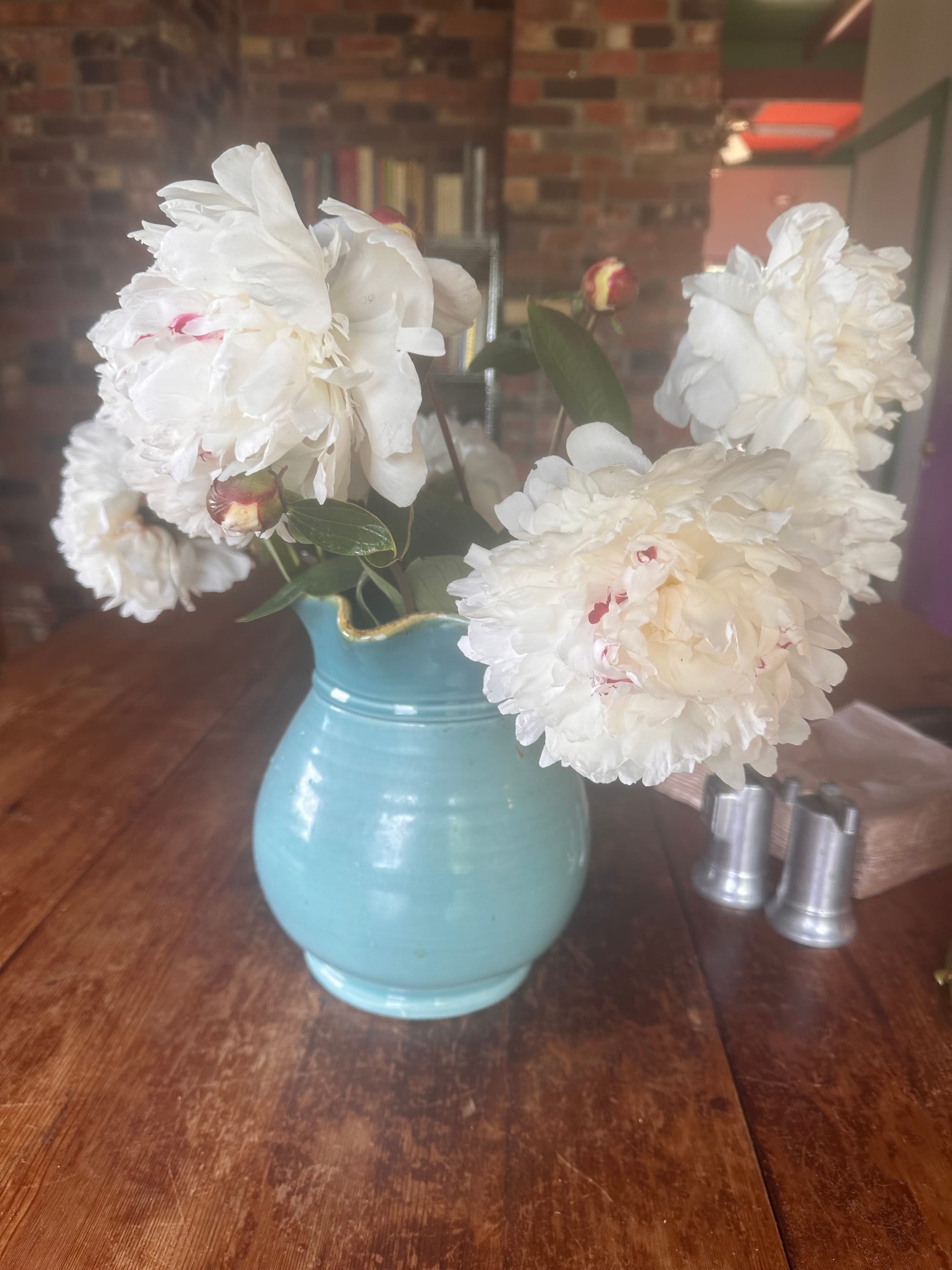
Time and energy is not the only variable impacting progress here. Still lacking running water, I'm limited in how much planting and cultivation I can do, so taming the spread of invasive species never un-useful, if not unending. Continuing from last summer, I've been restoring the "formal garden", a once-fully enclosed space in the middle of the property where flowers and flowering shrubs were plants. There are still vestiges of iris, lilac, peony, rhododendron, azalea, rose, and tulip, but many of these bulbs are overcrowded or past their prime. A full-scale takeover of Himalayan blackberry hasn't helped, though I managed to resuscitate a peony patch.
Though knocked down, the blackberry persists, and I am just as persistent. On my knees, with pruning shears in one hand and a bingo-dauber of Buckthorn Blaster™ in another, I scour the lawn and flower beds for new shoots.
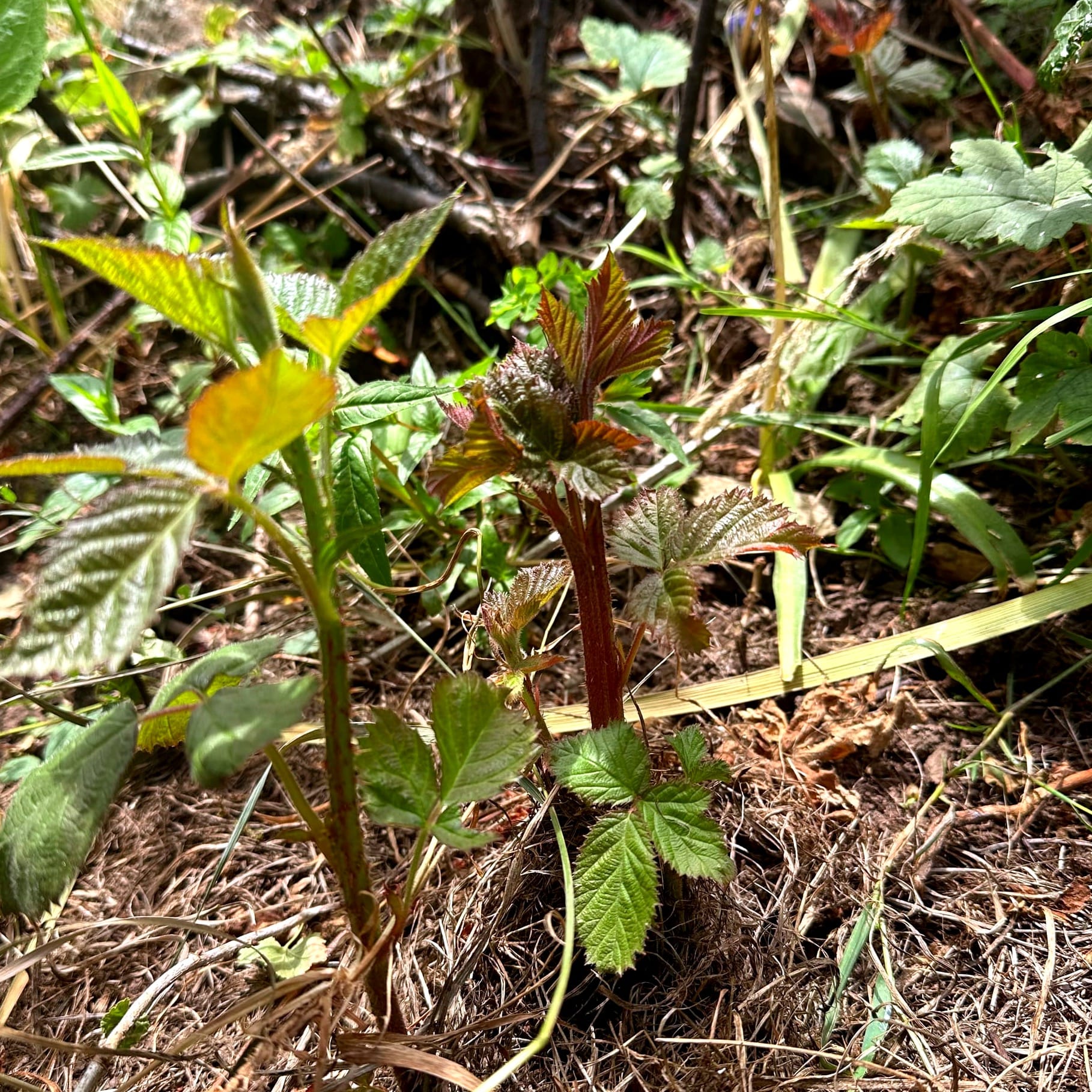
Brand new Himilayan blackberry shoots are a rusty crimson, but once they've established, their canes thicken and turn something south of chartreuse. This time a year, it only takes a day for new shoots to appear right next to a patch that had been poisoned or uprooted, and while I'm pulling, cutting, or dabbing, I picture a vast network of root crowns feed by the mother of all root crowns, meters below, pulsating with a will to dominate and compete for real estate, sunlight, and nutrients. Like the tansy ragwort, but with better armor, she is rapacious and arrogant. But at the end of the day, the Himalayan blackberry is just one in a series of colonizers here. And as I scrape my arms and bruise my knees, the irony that in the eyes of some of neighbors, I am the invasive species, is not lost.
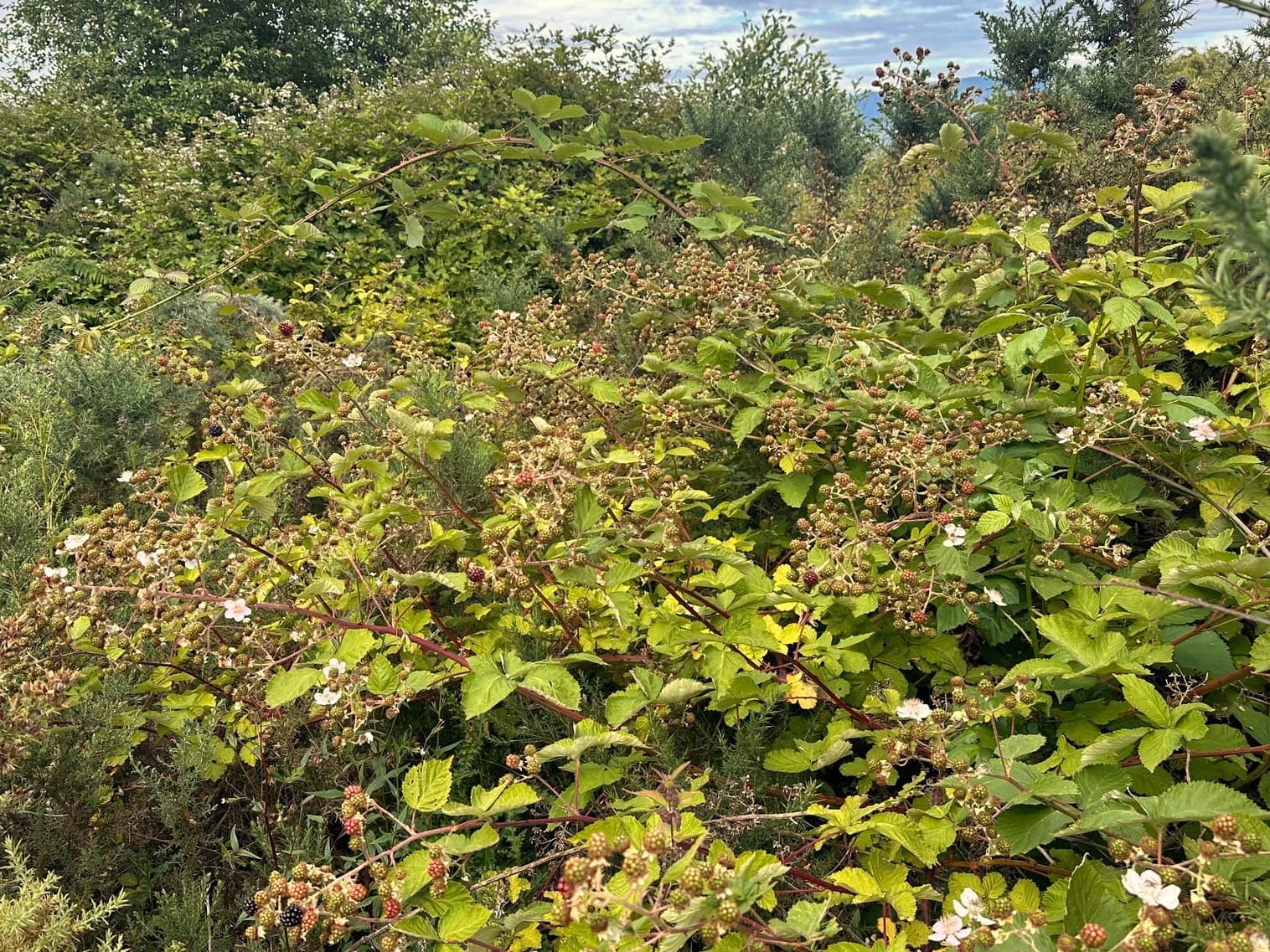
I have semi-successfully recovered three areas from Himalayan takeover, but 95% of the blackberry on the property is unmitigated and unbothered by my empty threats. Right now, those patches are going from white blossoms to unripe clusters of green and red and in about a month, their juicy, sweet, mercenary fruit will be ripe, right as my second harvest of the peach tree reaches its finale. Like last summer, I'll make a batch of blackberry-peach jam, a perfect metaphor for life after your 40's, when you are continuously wondering what you have done wrong and what you have done right. Some of your fruit comes from cultivation and intention. Some of it comes from your worst fuck-ups. And some of it just comes with the land itself.